How Should E2E Testing Evolve in the AI Era? From Fixed Scripts to an AI-Native Harness
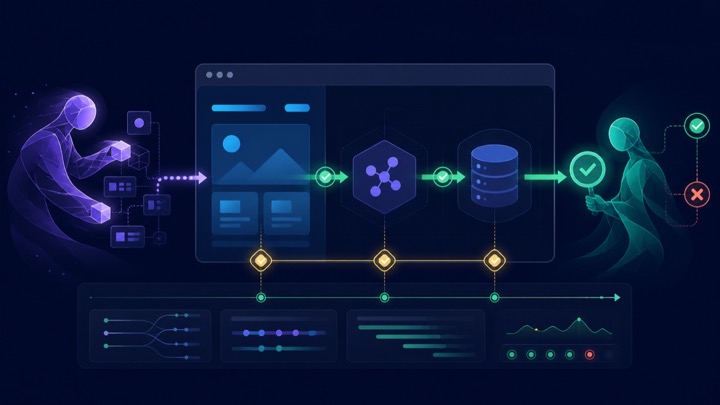
The short answer is this: in the AI era, E2E is not about asking AI to write more tests. It is about building an E2E harness that receives a build, executes a real user journey, preserves complete evidence, classifies failures, and turns new defects into regression protection.
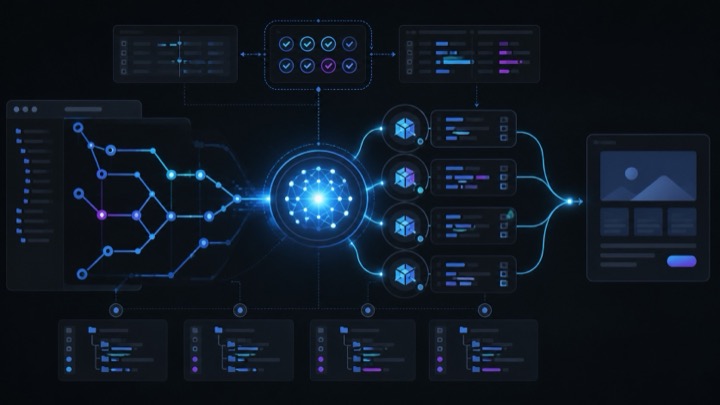
A single E2E test case answers whether one scenario passes. An E2E harness owns the specification, test data, execution environments, runner adapters, observability, CI gates, and the protocols that tell agents how to explore and repair. AI makes product changes faster, but it also increases the volume of defects, maintenance work, and changes. The upgrade is therefore not more scripts. It is better boundaries, observability, and feedback loops.
This article focuses on one question: when a Builder can continuously produce product changes, how should an AI-native E2E harness be designed so that fixed tests protect CI, agents explore unknown paths, and every result returns to development as useful evidence? Browser, mobile, API, and hybrid systems may use different adapters and folders; the architecture below is a general reference model, while Appium and WebView appear only as optional examples. The invariants are the black-box boundary, observable evidence, fixed acceptance, and exploratory feedback.