Suno v6 Released: Three New Models, Multimodal Audio Inputs, and Free Tier Guide

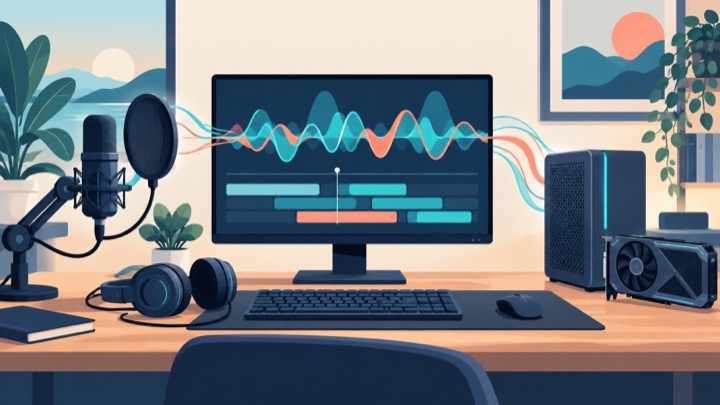
Generative AI music soundwaves and dynamic audio frequencies

On September 9, 2026, Suno officially released its sixth-generation music model: Suno v6. This is a major update—Suno completely retired all pre-v5.5 models, replaced them with a family of three distinct v6 models, and introduced practical features like humming voice inputs and in-place song editing.

Best of all, an active free trial window is currently open, allowing anyone with an account to test out the new models directly. This article breaks down what changed in v6, how to choose between the three new models, and what you need to know about the updated free tier and commercial rights.

Open-Source Game Architectures for AI Agents: Closed Loops, Editor Bridges, and Pragmatic Stacks

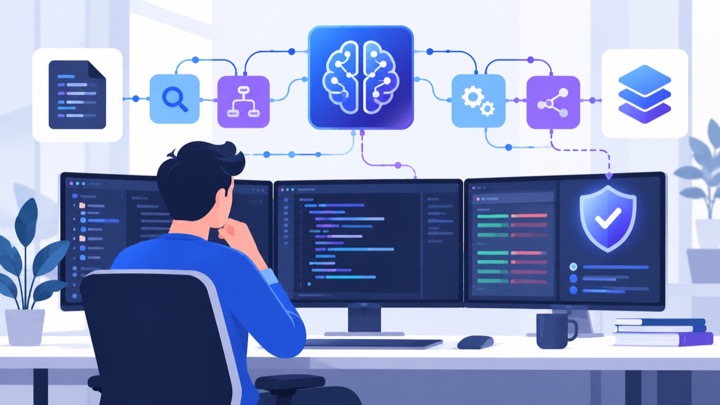
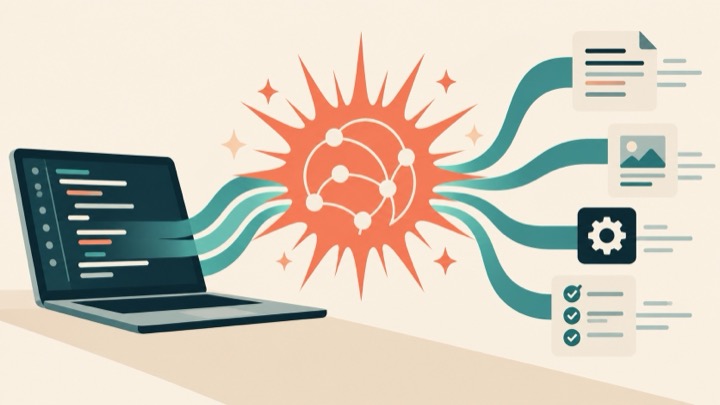
AI Agent inspecting runtime game viewports and automatically fixing code

In our previous deep dive on Beyond Vibe Coding: The Complete Agentic SDLC Architectural Guide, we examined how state machines and deterministic verification gates enable AI Coding Agents to reliably ship software. But when you transplant those principles into game development, engineers hit an immediate brick wall:

In standard Web or backend projects, an AI agent verifies its work by running unit tests, inspecting compiler diagnostics, or calling REST APIs. Games, however, are intrinsically visual, spatial, and real-time interactive systems. If you ask an agent to construct a 3D scene inside a traditional game engine, it frequently produces overlapping primitive boxes, missing textures, and broken spatial hierarchies.

This is not because AI cannot write game code. It happens because traditional game engines were conceived for human visual interaction, rather than autonomous programmatic manipulation by AI agents.

Why localhost Cannot Be Shared with Friends and How to Deploy Your AI Project Online

Architectural diagram illustrating the transition from a local computer to the global cloud network

When you open tools like Cursor, Lovable, v0, or Bolt, type in a few clear prompts, and watch a polished budgeting app, personal portfolio, or SaaS prototype materialize within seconds, the sense of momentum is undeniable. Buttons respond smoothly, animations look crisp, and your browser address bar proudly shows an address like http://localhost:3000.

Naturally, the first instinct for many creators is to copy this URL and share it with friends, colleagues, or potential users to get immediate feedback.

Moments later, the recipient sends back a screenshot showing a blunt browser error: This site can’t be reached.

Testing it on your phone gives the exact same disappointing result. You are left wondering: “If it runs flawlessly on my laptop, why does nobody else seem able to open it?”

Beyond Random Prompting: The Definitive Guide to Deterministic AI Image Generation with ComfyUI, LoRA, and ControlNet

Deterministic AI image generation and ComfyUI node pipeline architecture

Many developers and digital artists entering the open-source generative AI landscape experience the same initial frustration: crafting verbose text prompts only to receive distorted hands, awkward limbs, or characters whose facial identities completely change across shots.

In production environments, such as indie game development, character concept design, and animation storyboarding, creative teams cannot rely on random lottery mechanics. High-performing production studios achieve single-pass acceptance rates above 90% because they treat image generation as an engineered deterministic data pipeline. This guide deconstructs the open-source image generation stack from a software architecture perspective, clarifying Checkpoints, LoRAs, ControlNet, and ADetailer, while uncovering the five-stage multi-pass pipeline powering professional ComfyUI workflows.

Gemini 3.8 Flash Unleashed: Frontier-Tier Agentic Loops, DeepSWE Breakthroughs, and Ultra-Low Pricing

Gemini 3.8 Flash Intelligent Workhorse Model Architecture and Long-Horizon Agent Flow

On September 2, 2026, Google officially launched its next-generation Gemini model family: Gemini 3.8 Flash alongside the security-specialized Gemini 3.8 Flash Cyber. As the intelligence operating behind developer terminals and agentic IDEs to map codebases, refactor multi-module systems, and resolve production bugs, this release marks a decisive architectural turning point. Flash models are no longer lightweight assistants confined to simple conversations; they have evolved into long-horizon Intelligent Workhorses designed to challenge expensive frontier-tier flagships while keeping introductory pricing fixed at $0.75 per million input tokens and $3.75 per million output tokens.

Claude Fable 5.1 Unleashed — 75% Cheaper Cache Reads and the Future of Long-Horizon Coding Agents

Claude Fable 5.1 Flagship Model Architecture and Long-Horizon Agent Flow

On September 1, 2026, Anthropic officially unveiled its newest flagship model, Claude Fable 5.1 (alongside Claude Mythos 5.1 for Project Glasswing participants), engineered specifically for demanding reasoning and long-horizon agentic workflows. Featuring a 1M token context window and 128K token maximum output, Fable 5.1 introduces a game-changing pricing model: prompt cache reads are slashed to **0.025x of the base input price ($0.25/MTok)**—75% cheaper than the standard 0.1x cache rate across other Claude models.

How Should E2E Testing Evolve in the AI Era? From Fixed Scripts to an AI-Native Harness

A technical illustration of an AI-era E2E acceptance system connecting a product build, fixed tests, AI exploration, and test records

The short answer is this: in the AI era, E2E is not about asking AI to write more tests. It is about building an E2E harness that receives a build, executes a real user journey, preserves complete evidence, classifies failures, and turns new defects into regression protection.

A single E2E test case answers whether one scenario passes. An E2E harness owns the specification, test data, execution environments, runner adapters, observability, CI gates, and the protocols that tell agents how to explore and repair. AI makes product changes faster, but it also increases the volume of defects, maintenance work, and changes. The upgrade is therefore not more scripts. It is better boundaries, observability, and feedback loops.

This article focuses on one question: when a Builder can continuously produce product changes, how should an AI-native E2E harness be designed so that fixed tests protect CI, agents explore unknown paths, and every result returns to development as useful evidence? Browser, mobile, API, and hybrid systems may use different adapters and folders; the architecture below is a general reference model, while Appium and WebView appear only as optional examples. The invariants are the black-box boundary, observable evidence, fixed acceptance, and exploratory feedback.

How to Read AI Model Leaderboards: LMArena, SWE-bench, LiveBench, and 12 Metrics That Matter

Five AI evaluation methods connected to a central processor

AI model leaderboards compress many kinds of performance into a rank, but “number one” only means something when you know the method, date, model version, and use case behind it. Human preference, software repair, reasoning accuracy, response speed, and API cost answer fundamentally different questions.

This guide compares five AI evaluation platforms worth cross-checking today and explains 12 common metrics. The goal is not merely to find the highest-ranked model, but to decide whether that score predicts success in your own workload.