
Jev 1.14 Update: Images, Box Localization, and 262k Context

Jev 1.14 multimodal decisions illustrated by a bounding box around a cup connected to structured decision options

Jev 1.14.0 arrived on October 14, 2026. Alongside the model update, TypeSafe AI opened experimental image input, Box localization, and longer context. The decision interface can now take part in visual workflows.

New to Jev? Start with our earlier introduction to Jev, System One models, and probabilistic decisions for Choice, Score, and Noul. This follow-up covers the changes documented as of October 17, 2026. It draws on official announcements and documentation; we have not run paid API benchmarks for this article.


Fun Claude Code Commands: Side Questions, Rewind, Loops, and Terminal Extras

Claude Code terminal with conversation branches, rewind, a clock, and a radio

Claude Code has some surprisingly fun commands. Alongside writing code and fixing bugs, you can ask a side question, explore another conversation branch, rewind an attempt, or open a radio station while you work.

This guide pairs useful slash commands with situations where they help. For a quick first taste, try /btw, /rewind, and /radio: a question on the side, a chance to revisit an attempt, and a change of atmosphere.

Plan an App with AI: PRD, MVP Scope, and Acceptance Checks

A phone with a reading list, a product brief, and small planning cards on a desk

“Build me an app” can produce attractive screens without answering who will use them, which problem matters, or where the first version should stop. A short requirements document gives the AI something concrete to work toward. This guide uses a reading-list app to turn an idea into a focused first version, an implementation sequence, and acceptance checks.

Plan a Game with AI: Core Loop, Playable Prototype, and GDD

A game design notebook showing falling stars and a basket, beside a controller and planning cards

A request for an AI-built RPG can quickly expand into characters, equipment, random rewards, and multiplayer before a single round is playable. Start by deciding what the player repeatedly does, then reduce it to a small prototype you can play, restart, and observe. This guide uses a star-catching game to define the core loop, a one-page GDD, and first-version acceptance checks.

VoiceStudio Explained — A Simple Hardware Guide for Local AI Voice Work

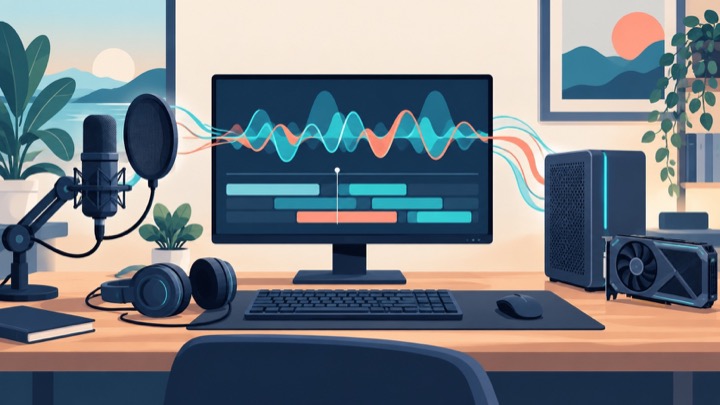
Local AI voice production desk for the VoiceStudio hardware guide

VoiceStudio brings text-to-speech, voice cloning, video dubbing, and batch audio production into one desktop interface. For game character auditions, narration, or language-learning material, its appeal is the ability to run supported speech models on your own computer.

Installing the application and using it comfortably every day are different milestones. This guide starts with four practical hardware tiers, then covers features, platform support, model selection, and a small first project.

What Can Dots Do? 18 Practical Examples in Six Categories

Concept illustration of Dots helping with collaboration, research, content, development, daily planning, and ongoing tracking

What can Dots do? Think about concrete work: preparing a meeting, comparing tools, building a website, planning a trip, or following a project’s progress. These 18 examples in six categories include a request you can adapt, the output to ask for, and the conditions needed to do the work. Start with the category closest to your own task.

OpenAI DevDay 2026: Dots, Space, GPT-6.1 Sol and All 25 Updates

Concept illustration of a dots personal agent and the GPT-6.1 Sol model

OpenAI DevDay 2026 connects personal agents, shared documents, and developer infrastructure. Dots takes on ongoing work, ChatGPT Space holds shared context, and GPT-6.1 Sol and Ultrafast address capability, cost, and latency. This guide covers the 25 entries in OpenAI’s announcement index and explains the distinctions that matter before trying them.

Claude Sonnet 5.5 Is Here: Pricing, Features, and Upgrade Notes

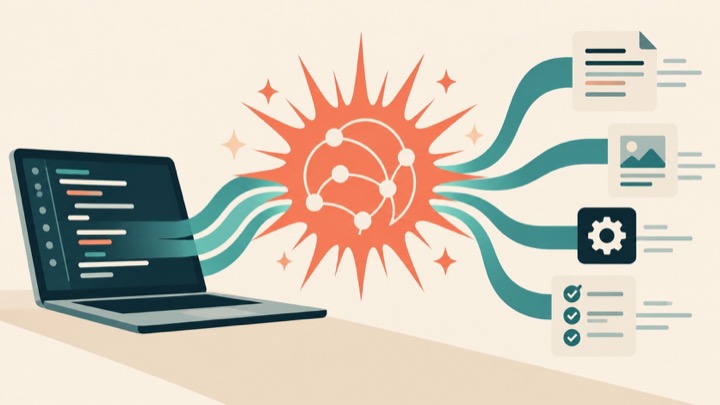
Claude Sonnet 5.5 connecting coding, documents, and tool workflows

Claude Sonnet 5.5 launched on September 28, 2026. Anthropic says it generates output more than 30% faster than Sonnet 5 and costs up to 30% less per task for most work. Token prices have not changed: the claimed savings come from greater efficiency. Official announcement

This guide reflects official material checked on September 29 in Taipei. Benchmark results below are published figures, not independent tests conducted for this article.