
Security Incidents Keep Coming: How to Protect Yourself in the AI Era
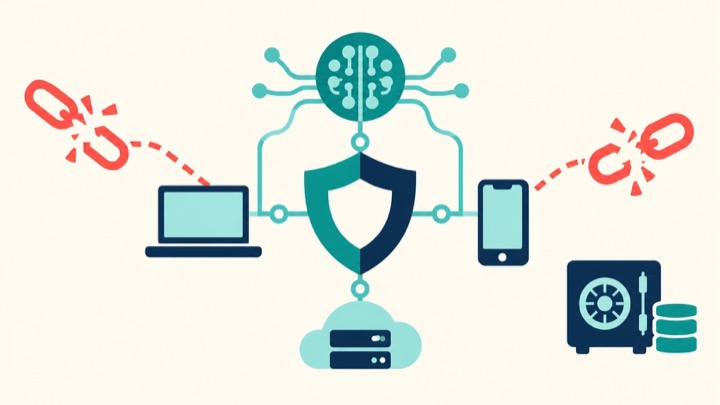
The recent stream of security incidents can make patch notices feel endless. Critical PHP flaws prompted urgent updates, while LiteLLM, a familiar name in AI development, suffered a supply chain compromise. Everyday tools suddenly deserve another look.
AI can write code, read email, and connect cloud services. That convenience also carries data and permissions across more systems. These recent cases offer a useful starting point for individuals and small teams who want to keep one mistake from becoming a chain of losses.
Sources checked through October 29, 2026, Taipei time. This article analyzes public official material. It does not report hands-on testing of the affected systems, and incident findings may develop further.
Recent incidents expose different weaknesses
PHP: runtime flaws reach the services built on top
On October 21, PHP published security updates for two critical vulnerabilities that could allow unauthenticated remote code execution. Updating application dependencies alone may leave a vulnerable runtime in place. Follow-up notices on October 23 and 26 addressed particular configurations and Windows dependencies, showing why patch work requires continued attention. PHP announcements and follow-up notices
For an operator, the practical questions are straightforward: Which services use this component? Who maintains them? How do we confirm that production is running the fix? Without an asset inventory, an emergency becomes a search exercise.
LiteLLM: an unrevoked key reached the release pipeline
On October 21, LiteLLM distributed malicious 1.107.0 packages and related container images. Its incident notice describes credential theft and remote-code loading. Exposure depends on the specific artifacts, versions, and execution history. Official impact and response notice
The October 23 postmortem traced the chain to an exposed administrative key that remained valid. It gave the attacker access to an overprivileged GitHub credential and, eventually, the release process. The findings also corrected earlier assumptions. Removing a key from a file must be followed by revoking the key itself. Official attack-chain report
AI misuse reports need careful interpretation
Anthropic’s September 2026 threat report describes AI-assisted reconnaissance, tooling, and attack orchestration in selected operations it disrupted between December 2025 and August 2026. These vendor-observed cases do not establish a global attack growth rate or show that AI caused the PHP or LiteLLM incidents above. Anthropic’s original report
AI connects speed, permissions, and financial exposure
My reading of these cases is that AI can amplify management failures that already matter. Three changes deserve attention.
Repetitive work becomes cheaper. Tools that help research targets, generate content, and revise code can let attackers try more paths with fewer people. A small website cannot rely on its size to stay unnoticed.
Permissions become a more consequential boundary. Imagine an assistant that can read email, query customer records, run programs, and send messages. A malicious document could influence its later actions. This is an illustrative scenario; the actual damage depends on the capabilities the system grants.
Stolen resources can become direct expenses. An API key for a paid service creates billing and capacity exposure as well as data risk. Small teams have accounts, compute resources, and customer trust worth protecting.
Individuals: secure accounts and limit data access
I would start with the main email account. It often controls password resets elsewhere, so it needs a unique password and a protected recovery process. Use passkeys where supported. FIDO Alliance classifies them as phishing-resistant authentication, while emphasizing the importance of recovery methods. Device security still matters. FIDO’s guidance
A few repeatable habits help:
- Open official apps or saved bookmarks yourself. Verify requests involving payments, account changes, or verification codes through contact details you already know.
- Inspect AI connections before granting access. Start with a single folder when that is sufficient, and revoke connections you no longer use.
- Share the minimum information needed. Remove names, contact details, customer records, and credentials from task excerpts. Check attachments and metadata too.
- Keep an independent copy of important files. Sync may propagate deletion or encryption, leaving you without the recovery history you need.
Developers and small teams: enforce least privilege
An assistant modifying one project can usually work with permissions limited to that project. Putting organization-wide credentials, production databases, and deployment access into one environment gives mistakes and intrusions more room to spread.
Prompt injection adds another route: instructions hidden in a webpage, email, or document may redirect an assistant’s behavior. OWASP recommends least privilege, separation of external content, and human review for high-risk operations. Tools and services should enforce authorization outside the model. OWASP risk guidance, implementation guidance
I would prioritize the following:
- Separate development, test, and production credentials. Use scoped, revocable access. Suspected exposure calls for revocation and log review, beyond deleting a public file.
- Record what actually runs. Keep dependency versions, lockfiles, and container digests. Pinning supports traceability and controlled changes; you still need to assess the pinned artifact.
- Prioritize updates by risk. Evaluate urgent vendor notices, active exploitation, public exposure, and access to sensitive data. Verify artifact sources instead of treating automatic upgrades as a complete defense.
- Test important authorization boundaries. One user must not read another user’s records. Show concrete effects before authorized people approve production deletion, payments, or permission changes.
- Monitor unusual activity and spending. Watch logins, permission changes, exports, and API usage. Check whether budget alerts actually stop service; a notification is not necessarily a spending cap.
Write a short response plan before an incident
Deciding whom to call, what to isolate, and where to restore under pressure makes omissions more likely. A small team can begin with a one-page plan:
- Contain spread and preserve necessary evidence. Isolate affected environments, restrict suspicious access, and retain relevant logs and a timeline.
- Revoke credentials from a trusted management environment. Review keys, sessions, connected-app grants, and potentially related accounts.
- Rebuild from trusted artifacts and verify recovery. Address the vulnerability and persistence paths, test data and critical functions, and monitor for further anomalies.
- Communicate confirmed impact. State what is known, what remains uncertain, and what action is underway. Distinguish absence of findings from proof of absence.
Test restores as well. HHS’s ransomware guidance recommends verifying recovery and considering offline backups inaccessible from the original network. This reference supports the technical recommendation here. Backups help restore service; copied data still needs a separate response. Backup and recovery guidance
Use AI to help verify, and keep the evidence
AI can organize official notices, compare sanitized asset inventories, and draft remediation tasks. Ask for sources, publication dates, affected conditions, and unresolved questions, then check the originals against the actual environment.
Individuals can begin with their main email account, AI access grants, and one tested backup. Developers can identify their most powerful credentials, internet-facing components, and the person responsible for urgent fixes.
Some of the time AI saves can go toward this easily postponed work. Knowing what a tool can access, who will spot unusual behavior, and how to withdraw access makes new tools easier to use with confidence.
Further reading: PHP vulnerabilities and emergency patching, Node.js October security update analysis.


